


Thank you for Subscribing to Chemical Industry Review Weekly Brief
Grundfos is a pioneer within water solutions, and a strong focus on digitalization and innovation contributes to position the company as a global leader in its field.
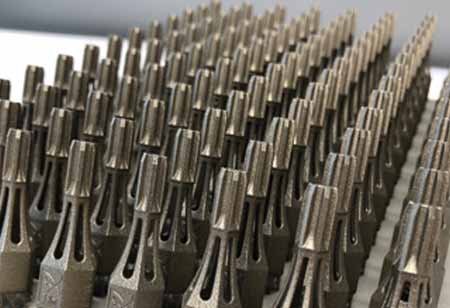
Additive manufacturing (AM) is a technology that is becoming increasingly important to Grundfos and has been refined for the production of advanced prototypes and sophisticated components during the last decade. We aim to mature AM for future production, allowing it to be scaled into high volume production of complex applications. This is made possible through broad collaboration across business functions and customer interaction. One example of this can be found in a number of our factories, where small desktop FDM printers placed locally have started a revolution when designing and manufacturing grippers, jigs, and fixtures. Today injection molding tools are designed with conformal cooling to reduce cycle time and improve part quality and machine utilization. All these initiatives improve our competitiveness by reducing time to market and driving down the cost of products. Our vision, however, goes beyond this. Conventional production methods have been refined to be very cost-effective for high volume production, but the manufacturing lines’ complexity makes them rigid and investment sensitive. We foresee that AM will disrupt the industry with new product offerings by interacting and co-developing with our customers in more convenient and agile ways. Utilizing AM enables a flexible production where smaller series can be manufactured cost-effectively. The freedom of design opens a whole new methodology of designing components and applications. Part consolidation and system integration reduces complexity and improves robustness and performance. In Grundfos, we prioritize sustainability and see opportunities in designing energy-efficient solutions on demand. If, for example, a pump is being operated sub-optimal to its pump curve, it could be at the expense of energy efficiency or, in the worst-case, damaging the pump due to cavitation. A sustainable solution to this challenge could be tailoring the hydraulic design to the duty point. In this way, design on demand can enable energy savings, and product life is potentially extended, adding significant customer value.Today injection molding tools are designed with conformal cooling to reduce cycle time and improve part quality and machine utilization
I agree We use cookies on this website to enhance your user experience. By clicking any link on this page you are giving your consent for us to set cookies. More info

However, if you would like to share the information in this article, you may use the link below: